
Blog
7 Powerful Scientific Facts About Alkaline Water Every Indian Family Should Know
- Posted By
-
 Water Expert Miezu
- On
- No Comments
- Uncategorized

Table of Contents
Alkaline water is often promoted for better hydration and wellness, but what does the science actually say? This guide breaks down seven evidence-based facts about alkaline water, including how pH works, what ORP means, how water ionizers use electrolysis, and why dissolved minerals and molecular hydrogen are attracting scientific interest.
Water is the foundation of life, yet most people know very little about the science behind the water they drink every day. As awareness about health, hydration, and wellness grows across India, terms such as alkaline water, hydrogen water, pH levels, ORP, and water ionizers are becoming increasingly common.
Unfortunately, the internet is filled with both accurate information and misconceptions. Some people consider alkaline water a miracle solution, while others dismiss it entirely. The truth lies somewhere in between.
Understanding the science behind alkaline water helps consumers make informed decisions about their hydration, health, and water purification choices.
This guide explores seven powerful scientific facts about alkaline water, how water ionization works, and why millions of households worldwide are becoming interested in advanced hydration technologies.
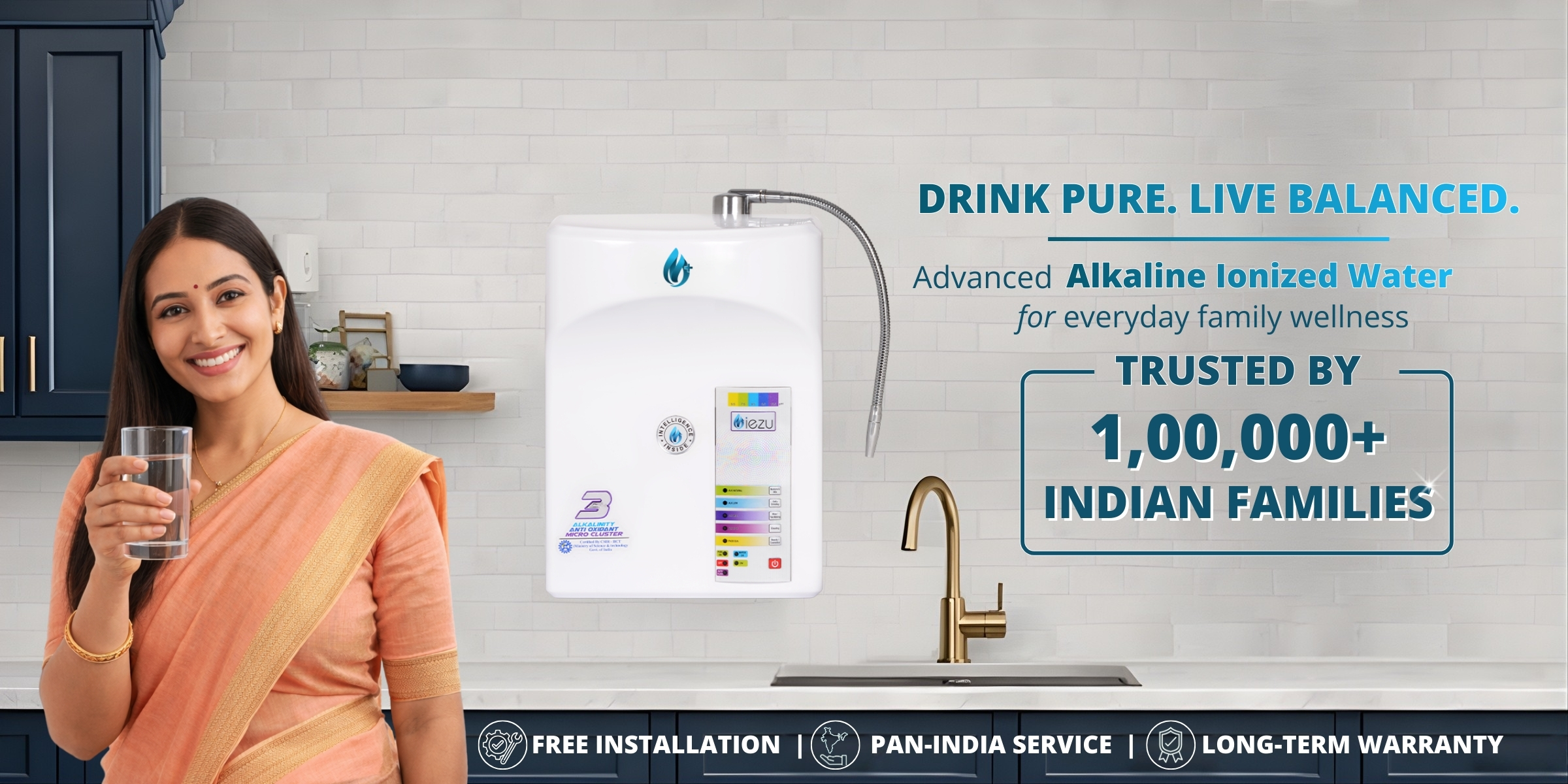
Alkaline Water Ionizer by Miezu
Key Alkaline Water Terms at a Glance
Before diving into the science, here’s a quick overview of the four terms most commonly associated with alkaline water and water ionization technology.
| Term | What It Means | Why It Matters |
| pH | Acidity or alkalinity of water | Affects taste and water chemistry |
| ORP | Oxidation-Reduction Potential | Related to electron exchange and antioxidant research |
| Electrolysis | Electrical process used in ionizers | Creates alkaline and acidic water streams |
| Molecular Hydrogen | Dissolved H₂ gas in water | Area of ongoing scientific research |
What Is Alkaline Water?
Alkaline water is water that has a pH level higher than 7.0.
The pH scale ranges from 0 to 14:
- pH 7 = Neutral
- Below pH 7 = Acidic
- Above pH 7 = Alkaline
Most alkaline drinking water typically falls between pH 8.0 and pH 9.5.
Apart from pH, alkaline water may also contain naturally occurring minerals such as:
- Calcium
- Magnesium
- Potassium
- Sodium
These minerals contribute to both taste and water composition.
Why Is Water Science Important?
The human body is approximately 60% water.
Water participates in virtually every biological function including:
- Nutrient transportation
- Digestion
- Temperature regulation
- Cellular communication
- Circulation
- Waste removal
Understanding water quality is therefore critical for long-term health and wellness.
Scientific Fact #1: pH Measures Hydrogen Ion Concentration
Understanding the pH Scale
One of the most misunderstood concepts about alkaline water is pH.
The term pH stands for “potential of hydrogen.”
It measures the concentration of hydrogen ions present in water.
A lower pH indicates:
- Higher acidity
- Greater hydrogen ion concentration
A higher pH indicates:
- Lower acidity
- Greater alkalinity
For example:
| Water Type | Typical pH |
| Distilled Water | 7.0 |
| Drinking Water | 6.5 – 8.5 |
| Alkaline Water | 8.0 – 10.0 |
Understanding pH helps explain why alkaline water tastes different and behaves differently from conventional drinking water.
Why pH Matters
The pH level influences:
- Taste
- Mineral availability
- Water chemistry
- User experience
However, pH is only one component of water quality.
Many consumers mistakenly focus exclusively on pH while ignoring other important factors such as mineral content and oxidation-reduction potential.
Understanding Alkaline Water pH Levels
Scientific Fact #2: Alkaline Water Contains Dissolved Minerals
Minerals Influence Water Quality
Natural water sources often contain dissolved minerals collected as water travels through rocks and soil.
Common minerals include:
Calcium
Supports:
- Bone health
- Muscle function
- Nerve signaling
Magnesium
Supports:
- Energy production
- Muscle recovery
- Cardiovascular function
Potassium
Supports:
- Electrolyte balance
- Hydration
- Cellular function
The presence of these minerals contributes to water’s taste profile and composition.
Why Mineral-Rich Water Is Different
Water containing balanced mineral levels often tastes:
- Fresher
- Smoother
- More satisfying
This is one reason why many consumers prefer mineral-rich water sources over highly processed water.
Scientific Fact #3: Water Ionization Uses Electrolysis
How Water Ionizers Work
Water ionizers use a process called electrolysis.
During electrolysis:
- Water enters the ionization chamber.
- Electricity passes through specialized metal plates.
- Water molecules separate into alkaline and acidic streams.
- Different pH levels are produced.
The process does not create water.
Instead, it modifies certain properties of existing water.
Why Plate Technology Matters
The quality of ionization largely depends on:
- Number of plates
- Plate surface area
- Material quality
Premium alkaline water ionizers often use:
- Solid titanium plates
- Platinum coatings
These materials help improve durability and ionization efficiency.
Scientific Fact #4: ORP Measures Oxidation and Reduction Potential
What Is ORP?
ORP stands for Oxidation Reduction Potential.
It measures a liquid’s tendency to either:
- Gain electrons
- Lose electrons
ORP is measured in millivolts (mV).
Understanding ORP Values
Positive ORP:
- Indicates oxidizing potential
Negative ORP:
- Indicates reducing potential
Many alkaline water ionizers produce water with a negative ORP value.
This characteristic has generated significant interest among researchers studying oxidative stress and molecular hydrogen.
Why ORP Is Discussed So Often
Oxidative stress occurs when free radicals exceed the body’s antioxidant defenses.
Researchers continue investigating how hydrogen-rich water and ORP may influence oxidative stress pathways.
Scientific Fact #5: Molecular Hydrogen Is a Growing Research Area
What Is Molecular Hydrogen?
Molecular hydrogen (H₂) is the smallest molecule in existence.
Certain water ionization technologies generate dissolved molecular hydrogen within drinking water.
Why Scientists Are Interested
Over the past two decades, researchers have studied molecular hydrogen for its potential role in:
- Oxidative stress management
- Cellular protection
- Exercise recovery
- Metabolic health
Research in this field continues to evolve, making molecular hydrogen one of the most exciting areas of water science.
Hydrogen Water vs Alkaline Water
While often grouped together, they are not identical.
Alkaline water focuses primarily on:
- pH
- Minerals
Hydrogen water focuses primarily on:
- Dissolved molecular hydrogen
Advanced ionizers often produce both.
Scientific Fact #6: Hydration Is More Than Just Water Intake
Quantity Matters
Many people focus exclusively on how much water they drink.
While quantity is important, hydration also depends on:
- Electrolyte balance
- Mineral content
- Activity levels
- Climate conditions
Why This Matters in India
India’s climate presents unique hydration challenges:
- High temperatures
- Humidity
- Long summers
- Frequent heatwaves
Proper hydration becomes especially important during:
- Outdoor work
- Sports
- Travel
- Summer months
This is one reason hydration awareness is growing rapidly among Indian families.
Hidden Cost of Dehydration During North India’s Summers
Scientific Fact #7: Water Quality Is Becoming a Global Wellness Priority
Consumers Are Becoming More Educated
Today’s consumers evaluate:
- Purity
- Minerals
- pH levels
- Filtration technologies
- Water safety
Water is no longer viewed merely as a utility.
It is increasingly considered part of preventive wellness.
The Rise of Smart Water Technologies
Modern water systems now incorporate:
- AI controls
- Water quality monitoring
- Multi-stage filtration
- Advanced ionization
These innovations allow consumers greater control over the water they consume daily.
Best Water Purifier for Home in India
Common Myths About Alkaline Water
Myth #1: Alkaline Water Is a Miracle Cure
Reality:
- No water should be considered a cure for diseases.
- Healthy hydration is one component of a balanced lifestyle.
Myth #2: Higher pH Is Always Better
Reality:
- Extremely high pH levels are not necessarily ideal for everyday drinking.
- Moderate alkaline levels are generally preferred for routine consumption.
Myth #3: All Alkaline Water Is the Same
Reality:
Water quality depends on:
- Source water
- Mineral content
- Filtration quality
- Ionization technology
Not all alkaline water is created equal.
Why Indian Families Are Learning More About Water Science
Several trends are driving interest:
Health Awareness
Consumers are becoming more proactive about wellness.
Heatwaves
Rising temperatures increase focus on hydration.
Water Quality Concerns
Urban populations increasingly evaluate water purification methods.
Technology Adoption
Modern households are embracing smart wellness technologies.
As a result, educational content around water science is becoming increasingly important.
External Resource
For readers interested in learning more about drinking water quality standards and water safety, refer to the World Health Organization’s guidelines on drinking-water quality.
Frequently Asked Questions
What is alkaline water?
Alkaline water is water with a pH level above 7 and may contain dissolved minerals such as calcium and magnesium.
How does a water ionizer work?
A water ionizer uses electrolysis to separate water into alkaline and acidic streams, producing water with different pH levels.
What is ORP in water?
ORP stands for Oxidation Reduction Potential and measures a liquid’s tendency to gain or lose electrons.
Is hydrogen water the same as alkaline water?
No. Hydrogen water focuses on dissolved molecular hydrogen, while alkaline water focuses on pH and mineral composition.
Why are people interested in alkaline water?
Consumers are increasingly interested in hydration, wellness, water quality, and advanced purification technologies.
Does water quality affect hydration?
Water quality influences taste, mineral content, and drinking habits, all of which may affect overall hydration behavior.
How to Evaluate Alkaline Water Systems
For households exploring advanced water purification and ionization, the key is to evaluate filtration quality, mineral balance, pH control, and long-term reliability rather than marketing claims alone.
When comparing different systems, consider factors such as source water compatibility, filtration performance, ionization technology, maintenance requirements, and after-sales support. Understanding the science behind water quality makes it easier to choose a solution that aligns with your family’s hydration needs and wellness goals.
Conclusion
The science of water extends far beyond simply quenching thirst. Concepts such as pH, ORP, electrolysis, minerals, and molecular hydrogen are transforming how consumers think about hydration and wellness.
Understanding these seven scientific facts provides a strong foundation for evaluating modern water technologies and making informed decisions about daily hydration.
As awareness grows across India, consumers are moving beyond basic purification and exploring smarter ways to optimize water quality, hydration habits, and long-term wellness.
The future of healthy living begins with understanding one of the most important substances on Earth: water.