
Blog
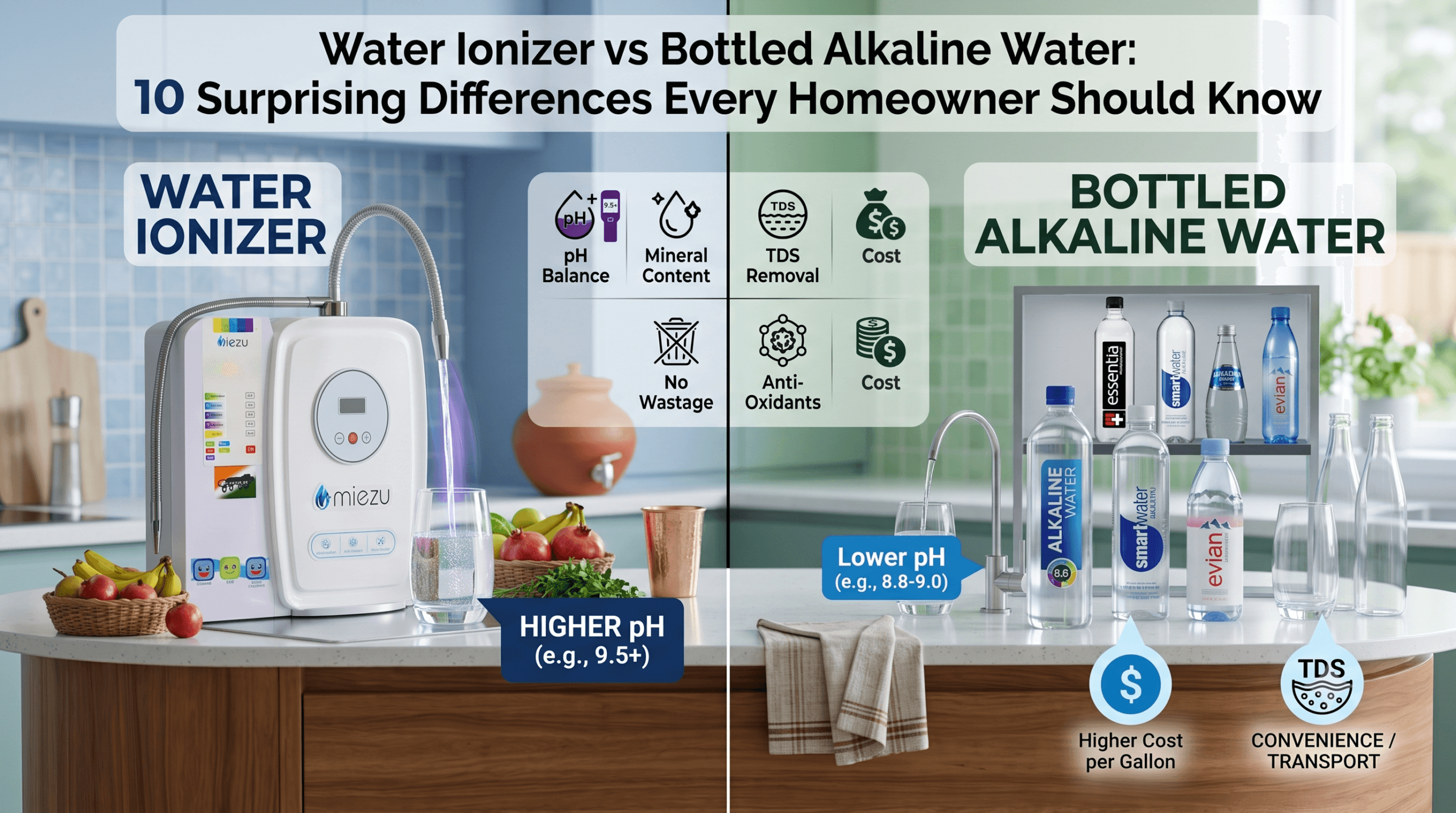

Every month, many Indian families spend a significant amount on bottled alkaline water, hoping to enjoy the convenience of premium hydration. But over the long run, is repeatedly buying bottles the smartest choice, or would installing a home water ionizer offer better value?
Both bottled alkaline water and home water ionizers provide alkaline drinking water, but they differ in several important ways, including freshness, convenience, long-term costs, environmental impact, quality control, and everyday usability.
The right choice depends on factors such as how often you drink alkaline water, your household size, your local water source, and whether you prioritize portability or unlimited access at home.
In this guide, we’ll compare bottled alkaline water and home water ionizers across the factors that matter most to Indian households, helping you make an informed decision based on your lifestyle, budget, and hydration needs.
What Is Bottled Alkaline Water?
Bottled alkaline water is commercially packaged drinking water that has been processed to achieve a higher pH level than regular drinking water.
Depending on the manufacturer, alkalinity may be achieved through:
- Mineral addition
- Electrolysis
- Proprietary processing methods
The water is then sealed in bottles and distributed through retail stores, supermarkets, gyms, airports, hospitals, and online platforms.
Bottled alkaline water offers convenience, particularly for people who need alkaline water while travelling or when away from home.
In India, packaged drinking water must comply with the Bureau of Indian Standards (BIS) quality requirements. Consumers should always purchase bottled water from licensed manufacturers and check the packaging for manufacturing and expiry dates.
[Reference: BIS IS 14543 (Packaged Drinking Water)]
What Is a Home Water Ionizer?
A home water ionizer is an appliance that produces alkaline water on demand.
After water passes through a filtration system, it enters an electrolysis chamber containing solid titanium plates coated with platinum.
The electrolysis process produces alkaline water for drinking and acidic water for selected household applications.
Depending on the model, water ionizers may include:
- Integrated RO purification
- Multi-stage filtration
- Smart AI technology
- Multiple pH settings
- Digital controls
- Hydrogen water capability
Unlike bottled water, the water is produced fresh whenever required.
Difference #1: Freshness
Bottled Alkaline Water
Bottled water may remain in:
- Manufacturing facilities
- Distribution warehouses
- Transport vehicles
- Retail shelves
before reaching the consumer.
Storage duration varies depending on inventory movement.
Home Water Ionizer
Water is produced immediately before consumption.
Freshness is not only about when water is produced but also how it is stored. Bottled water may spend weeks or months in warehouses, transport vehicles, or retail shelves before consumption. During this period, bottles may be exposed to varying temperatures and storage conditions. In contrast, a home water ionizer produces drinking water immediately before use, eliminating long storage periods after production.
For hydrogen-generating water ionizers, dissolved hydrogen concentration naturally decreases over time after production. Drinking freshly generated hydrogen-rich water is generally recommended by manufacturers and researchers studying dissolved hydrogen stability.
For many homeowners, this represents one of the biggest advantages of owning a water ionizer.
Difference #2: Daily Convenience
Bottled Alkaline Water
Regular purchases require:
- Store visits
- Online orders
- Deliveries
- Inventory management
Running out of bottled water often means making another purchase.
Home Water Ionizer
A home water ionizer provides alkaline water whenever required.
Simply open the tap and dispense water.
There is no need to:
- Carry bottles
- Reorder supplies
- Store cartons
For daily family use, this convenience is significant.
Difference #3: Long Term Cost
Many consumers compare only the upfront cost.
However, hydration is a daily necessity.
Bottled Alkaline Water
Costs continue indefinitely because every litre must be purchased again.
Over several years, recurring purchases can become substantial for households that consume alkaline water every day.
Home Water Ionizer
The primary investment is made once.
Future expenses generally include:
- Filter replacement
- Routine servicing
- Preventive maintenance
For families that regularly consume alkaline water, long term ownership may become more economical than continuous bottled purchases.
Example Cost Comparison for an Indian Family
The long-term cost of bottled alkaline water depends on your daily consumption and the brand you purchase. The following example illustrates how costs may compare for a family of four consuming approximately 10 litres of alkaline water per day.
| Cost Comparison (Illustrative Example) | Bottled Alkaline Water | Home Water Ionizer |
|---|---|---|
| Daily Consumption | 10 litres | 10 litres |
| Annual Water Requirement | ~3,650 litres | ~3,650 litres |
| Initial Investment | ₹100-150 per litre | ₹98,500* |
| Ongoing Expense | Purchase bottled water regularly | Annual filter replacement and maintenance |
| Estimated 1-Year Cost | ₹3,65,000 | ₹98,500* |
| Estimated 2-Year Cost | ₹7,30,000 | ₹7500*( AMC) |
* Starting price. Actual price may vary by model and offers.
** Illustrative AMC cost. Actual charges may vary by model.
This comparison is intended for illustrative purposes only. Actual costs vary depending on bottled water prices, household consumption, maintenance schedules, replacement filters, electricity usage, and the specific water ionizer model. Calculate costs based on your family’s daily water consumption before making a purchase decision.
Difference #4: Environmental Impact
Plastic waste has become a major environmental concern worldwide. According to the United Nations Environment Programme (UNEP), plastic pollution is one of the world’s most pressing environmental challenges. India generates millions of tonnes of plastic waste every year, with single-use plastic packaging contributing significantly to the problem. Although PET bottles are recyclable, collection and recycling rates vary across regions, and many bottles still end up in landfills or the environment. Reducing reliance on single-use plastic bottles can help lower household plastic waste.
Bottled Alkaline Water
Frequent purchases often generate:
- Plastic bottles
- Packaging materials
- Transportation emissions
Even recyclable plastics require energy and infrastructure for collection and processing.
Home Water Ionizer
A home water ionizer significantly reduces dependence on single-use plastic bottles.
Many environmentally conscious families choose home water systems as part of a more sustainable lifestyle.
Difference #5: Water Availability
Bottled Water
Availability depends on:
- Local retailers
- Stock levels
- Delivery schedules
- Brand distribution
Certain premium alkaline water brands may not be available in every city.
Water Ionizer
Water is available continuously at home whenever:
- Water supply is available
- The purifier is operational
There is no dependence on retail inventory.
Difference #6: Water Quality Control
The World Health Organization recommends maintaining safe drinking water through proper treatment, storage, and regular system maintenance, regardless of the source of drinking water.
Bottled Water
Consumers rely on the manufacturer’s quality assurance processes.
Once bottled, the consumer has little visibility into:
- Storage conditions
- Transportation environment
- Shelf duration
Water Ionizer
Homeowners maintain greater control over:
- Filter replacement
- Maintenance schedule
- Water production
- System servicing
Routine maintenance helps ensure consistent system performance.
Difference #7: Water Customization
Bottled Alkaline Water
The pH level is predetermined by the manufacturer.
Consumers cannot adjust it.
Water Ionizer
Most premium water ionizers allow users to select different water modes depending on the intended application.
Examples may include:
- Drinking water
- Mild alkaline water
- Higher alkaline water
- Acidic water for non-drinking household purposes
This flexibility is unavailable with bottled products.
Difference #8: Family Suitability
Bottled Water
Suitable for:
- Travel
- Short-term use
- Occasional consumption
Less practical for households consuming alkaline water throughout the day.
Home Water Ionizer
Designed for:
- Daily family use
- Continuous hydration
- Cooking
- Beverage preparation
Large households often appreciate the convenience of unlimited access.
Difference #9: Storage Requirements
Bottled Water
Requires storage space for:
- Individual bottles
- Multi-pack cartons
- Bulk purchases
This can become inconvenient in apartments or smaller homes.
Home Water Ionizer
Requires only the installation space of the appliance itself.
There is no need to allocate storage for bottled inventory.
Difference #10: Long Term Value
When comparing the two options, the key question becomes:
“Which solution provides greater long-term value?”
For regular alkaline water consumers, value depends on:
- Daily usage
- Family size
- Convenience
- Operating costs
- Lifestyle preferences
For many homeowners, a water ionizer becomes a long-term household appliance rather than a recurring purchase.
Water Ionizer vs Bottled Alkaline Water Comparison Table
| Factor | Bottled Water | Water Ionizer |
|---|---|---|
| Initial Investment | Low | Higher |
| Running Cost | Continuous | Low after installation |
| Installation | None | Required |
| Electricity | None | Minimal |
| Maintenance | None | Filter replacement & servicing |
| Warranty | Not applicable | Manufacturer warranty |
| Lifespan | Not applicable | Often 8 to 15 years depending on maintenance |
| Service Support | Retail purchase | Manufacturer service network |
Water Ionizer vs Bottled Alkaline Water Comparison Table
| Feature | Water Ionizer | Bottled Alkaline Water |
|---|---|---|
| Water Production | On demand | Pre-packaged |
| Freshness | Freshly produced | Depends on storage and distribution |
| Daily Convenience | Continuous supply | Requires repeated purchases |
| Plastic Waste | Minimal | High |
| pH Selection | Multiple settings on many models | Fixed |
| Family Use | Excellent | Moderate |
| Travel Friendly | Home use | Excellent |
| Long Term Ownership | Appliance maintenance | Continuous purchases |
| Storage Requirement | Minimal | Bottle storage required |
| Sustainability | Higher | Lower |
Which Option Is Better for Families?
Families consuming alkaline water daily often prioritize:
- Continuous availability
- Convenience
- Lower long-term operating costs
- Reduced plastic waste
A home water ionizer is generally better suited for these needs.
Which Option Is Better for Travellers?
Travellers who need alkaline water occasionally may find bottled alkaline water more practical during:
- Flights
- Road trips
- Business travel
- Vacations
Many households combine both solutions by using a home water ionizer while relying on bottled water only during travel.
Common Misconceptions
Myth 1
Bottled alkaline water is always fresher.
Reality:
Freshness depends on production date, storage duration, and distribution.
Home water ionizers produce water immediately before consumption.
Myth 2
Both options are identical.
Reality:
Although both provide alkaline water, the production process, convenience, operating costs, and user experience differ significantly.
Myth 3
A water ionizer is only for luxury homes.
Reality:
Modern water ionizers are increasingly being adopted by health-conscious families seeking long-term hydration solutions.
Who Should Choose Bottled Alkaline Water?
Bottled alkaline water may be appropriate for:
- Travellers
- Occasional users
- People wanting to try alkaline water before investing in a home appliance
Who Should Choose a Home Water Ionizer?
A home water ionizer may be suitable for:
- Families drinking alkaline water every day
- Homeowners seeking long-term convenience
- Consumers looking to reduce plastic waste
- Individuals interested in advanced hydration technologies
- Households wanting fresh alkaline water on demand
External Resource
For information about reducing plastic waste and promoting sustainable consumption, refer to the United Nations Environment Programme resources on plastic pollution and sustainable living.
United Nations Environment Programme Plastic Pollution Resource Centre
WHO Guidelines for Drinking-water Quality
Frequently Asked Questions
Is a water ionizer better than bottled alkaline water?
For households that consume alkaline water regularly, a water ionizer often offers greater convenience, fresh water on demand, and lower long-term ownership costs.
Is bottled alkaline water safe?
Commercial bottled alkaline water is manufactured according to applicable quality standards. Consumers should always purchase products from reputable brands.
Does bottled alkaline water stay fresh indefinitely?
Although bottled water has a shelf life, freshness may be influenced by storage conditions and time between production and consumption.
Can a water ionizer replace bottled alkaline water?
Yes. Many homeowners install water ionizers to produce alkaline water at home instead of purchasing bottled products regularly.
Which option is more environmentally friendly?
A home water ionizer generally generates significantly less plastic waste than continuous bottled water consumption.
Is bottled alkaline water suitable for travel?
Yes. Bottled alkaline water is convenient for travel and situations where access to a home water ionizer is unavailable.
Conclusion
The choice between a water ionizer and bottled alkaline water ultimately depends on how frequently you consume alkaline water and what you value most.
Bottled alkaline water offers portability and convenience for occasional use, making it a practical option for travel and short-term consumption.
A home water ionizer, on the other hand, provides fresh alkaline water on demand, greater long-term convenience, reduced dependence on plastic bottles, and continuous access for the entire household.
For families committed to making healthy hydration a part of everyday life, investing in a home water ionizer can offer a more practical, sustainable, and economical solution over time.
Choosing the right option is not simply about buying alkaline water. It is about selecting a hydration solution that fits your lifestyle today and continues delivering value for years to come.
Important: This comparison focuses on practical differences such as convenience, cost, sustainability, and usage. While alkaline water is widely consumed, current scientific evidence regarding specific health benefits is still evolving.