
Blog
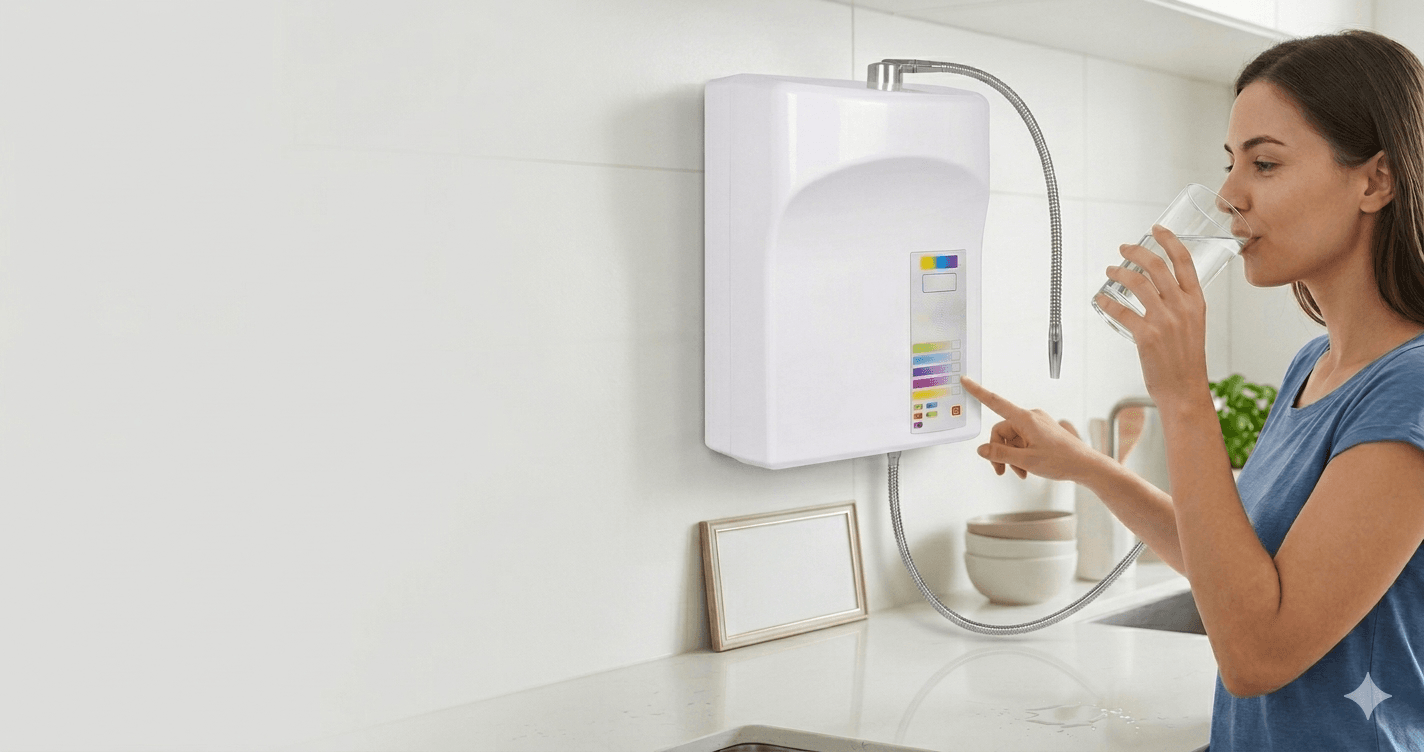
Alkaline Ionizer vs RO Water Purifier for Hard Water Homes in India – What’s Better and Why?
- Posted By
-
 Miezu Water Expert
- On
- No Comments
- Uncategorized

Table of Contents
Table of Contents
Introduction
The Indian water purifier market has reached a crossroads. On one side, there’s the long-standing RO (Reverse Osmosis) system that most people believe is the safest choice for removing impurities in hard water regions. On the other side, a newer category is quietly rising – alkaline ionizers – promising healthier water with minerals and antioxidant properties still intact.
So if you live in a city where water comes with high TDS, hardness, or borewell sourcing, which system should you actually install?
Not brand promotion. Not speculation. A real, fact-based answer to a very practical question: “In Indian homes dealing with hard water, is an alkaline ionizer better than an RO purifier – or should both be used together?”
1. Understanding Hard Water in India
Hard water contains high levels of dissolved minerals – mainly calcium and magnesium, but also iron, silica, fluoride, and other salts. Hardness is measured in TDS (Total Dissolved Solids) in parts per million (ppm).
| City / Region | Typical Water Source | Avg TDS (ppm) | Hardness Category |
|---|---|---|---|
| Delhi / NCR | Borewell + tanker | 500–1,200 | Hard to Very Hard |
| Jaipur / Jodhpur | Groundwater | 900–2,000+ | Very Hard |
| Chennai | Borewell + desalination | 600–1,000 | Hard |
| Pune | Mixed groundwater / lake | 300–600 | Moderately Hard |
| Bengaluru | Borewell + municipal | 200–450 | Slightly Hard |
| Mumbai | Municipal lake water | 100–250 | Soft to Moderate |
Hard water problems in Indian homes include:
- Thick scaling in kettles, taps, and tanks
- RO membranes choking every 6–12 months
- Dry skin and hair
- Bitter taste and odor
- Higher purifier maintenance costs
2. How RO Works vs How an Alkaline Ionizer Works
RO (Reverse Osmosis): Mechanism and Output
Reverse osmosis forces water through a semi-permeable membrane, rejecting 95–99% of dissolved solids.
What RO removes: Dissolved salts and minerals, fluoride, arsenic, heavy metals, microbes (indirectly via pre-carbon or UV stages)
What RO leaves behind: Demineralized water, acidic pH (typically 5.5–6.5), 70–80% of water wasted in the process
Alkaline Ionizer: Mechanism and Output
An alkaline ionizer uses electrolysis to separate incoming filtered water into alkaline (drinkable) and acidic (external-use) streams.
What an ionizer outputs: pH-adjusted alkaline water (8.5–9.5), retained minerals (calcium, magnesium, potassium), dissolved hydrogen (H₂) for antioxidant benefit, zero water wastage
What it does NOT do: It cannot remove extremely high TDS from hard water on its own; it requires pre-filtration in high-TDS regions.
Side-by-Side Comparison
| Feature | RO System | Alkaline Ionizer |
|---|---|---|
| Removes Hard Water TDS | Yes | No |
| Retains Natural Minerals | No | Yes |
| Water Wastage | 70–80% | None |
| pH of Output | 5.5–6.5 (acidic) | 8.5–9.5 (alkaline) |
| Ideal TDS Level | Above 400 ppm | Below 300 ppm |
| Long-Term Health Output | Mineral-deficient, oxidizing | Mineral-rich, antioxidant |
3. Can an Alkaline Ionizer Replace RO in Hard Water Homes?
Short answer: Not directly – but strategically.
Case 1 – TDS below 300 ppm (Soft Water)
Example Cities: Mumbai, parts of Bangalore, Kochi
→ Ionizer can be used without RO, as long as sediment filtration exists.
Case 2 – TDS between 300–800 ppm (Moderately Hard)
Example Cities: Pune, Hyderabad, Gurugram, Chennai suburbs
→ Best setup: pre-filter + ionizer, no RO needed unless chemical contamination is present.
Case 3 – TDS above 800+ ppm (Hard to Very Hard)
Example Cities: Jaipur, Jodhpur, Indore, parts of Delhi
→ Ionizer cannot replace RO. You need: RO + mineral cartridge + ionizer.
In India’s hard-water belt, the best long-term configuration isn’t RO versus ionizer – it’s RO + ionizer, working in sequence: RO removes excess salts → Ionizer restores healthy minerals, pH, and structure.
4. Cost of Ownership Comparison (5-Year Snapshot)
One of the myths in India is that ionizers are only for “rich homes,” but when viewed over a 5–7 year lifecycle, the cost reality looks different:
Key Insights:
- RO appears cheaper upfront, but repeated membrane + filter changes make it expensive long-term
- Ionizer costs more upfront, but lifetime cost is equal or lower – especially in cities with soft-to-moderate water
- RO units silently waste thousands of liters per year – which adds cost if you’re on tanker supply
A ₹90,000 ionizer that lasts 12 years = ₹625/month. Most Indian families spend more than that on bottled water.
5. Water Chemistry and Health Impact
| Water Type | pH | Mineral Content | Oxidation Level | Long-Term Suitability |
|---|---|---|---|---|
| RO Water | 5.5–6.5 | Very low | Positive ORP (pro-oxidant) | Not ideal for regular drinking |
| Ionized Alkaline Water | 8.5–9.5 | Naturally mineralized | Negative ORP (antioxidant) | Ideal for adults, seniors, athletes |
| Borewell Untreated | 7–8 | High salts/metals | Variable | Not safe |
What doctors note in India:
- RO water may not hydrate cells optimally due to low mineral content
- Ionized water supports digestion, skin pH balance, and metabolic function
- Kids, elderly, thyroid, and diabetic patients benefit from mineralized alkaline water
> Note: Always consult your physician for specific medical conditions.
6. Maintenance Reality in Indian Homes
| Problem | RO System | Alkaline Ionizer |
|---|---|---|
| Scaling | High | Low (if filtered) |
| Filter Clogging | Frequent | Occasional |
| Membrane Failure | Very common | Not applicable |
| Power Dependency | No | Yes |
| Cleaning Requirement | Moderate | Low to moderate |
If you live in a high-TDS city: RO will eventually clog unless water is softened; Ionizer plates will scale unless pre-filter is added. The key is smart pairing, not blind replacement.
7. Final Decision Framework (India)
| TDS Level | Best Setup | Example Cities |
|---|---|---|
| < 200 ppm | Ionizer only | Mumbai, parts of Bangalore |
| 200–400 ppm | Sediment + Ionizer | Pune, Mysore, Chandigarh |
| 400–800 ppm | RO + Mineral + Ionizer | Gurugram, Chennai, Indore |
| > 1,000 ppm | RO (mandatory) + Ionizer | Jaipur, Jodhpur |
Conclusion
There is no single winner between RO and alkaline ionizers – because the question is not which is better overall, but which is better for your water source.
RO systems are still necessary for extremely hard, contaminated, or borewell water in many Indian cities. Alkaline ionizers, on the other hand, are the health-focused evolution – restoring minerals, pH, and antioxidant value that RO strips away.
In most real-world cases, the right setup is not RO or ionizer – it’s RO + mineral cartridge + alkaline ionizer – giving you purity and functionality.
Before you buy any water system, start by understanding your input water. Test your TDS, look at seasonal variation, and ask how much purification you truly need. Once you know your water, the decision becomes clear – and the product you buy actually works the way it should.
Clean water is about more than removing impurities. It’s about supporting long-term wellness – for the body, the home, and the environment.