
Blog
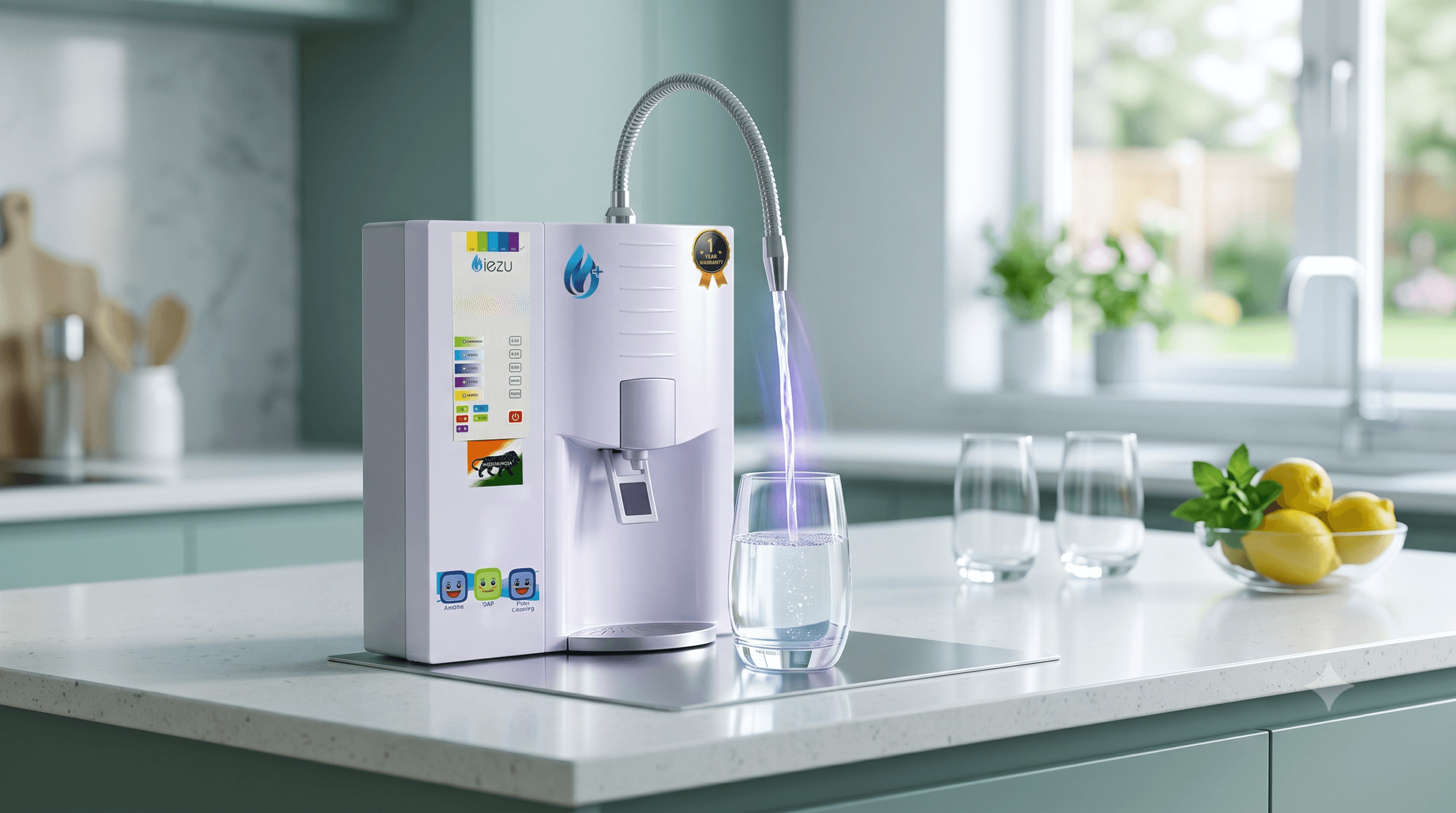

The Indian water purification market has changed dramatically over the past decade.
Consumers no longer want a machine that simply removes contaminants. They want healthier water, better hydration, smarter technology, lower maintenance costs, and long term value.
This growing awareness has led many homeowners to explore water ionizers.
However, buying a water ionizer can be confusing.
Questions such as these are extremely common:
- Which water ionizer is best?
- How many plates do I need?
- Should I buy a 5 plate or 9 plate machine?
- Do I need RO with a water ionizer?
- Will it work with my home’s water supply?
- Is a premium water ionizer worth the investment?
Unfortunately, many buyers purchase a water ionizer based on advertisements, influencer recommendations, or price alone.
The reality is that selecting the right water ionizer requires understanding your water quality, family requirements, lifestyle, and long term maintenance costs.
This comprehensive guide explains everything you should evaluate before purchasing a water ionizer so that you make an informed investment for your family’s health.
What Is a Water Ionizer?
A water ionizer is an advanced water treatment system that combines purification with electrolysis.
After water is purified, it passes through an electrolysis chamber containing titanium plates coated with platinum.
The electrolysis process separates purified water into:
- Alkaline water
- Acidic water
Premium systems may also generate hydrogen rich water depending on their design and operating technology.
Unlike traditional water purifiers, water ionizers focus on both water purification and water quality enhancement.
Why More Indian Families Are Buying Water Ionizers
Consumers today are becoming increasingly aware of:
- Drinking water quality
- Mineral content
- Daily hydration
- Preventive healthcare
- Smart home appliances
As a result, water ionizers are no longer viewed as luxury appliances.
They are becoming part of modern wellness focused homes.
Why Choosing the Right Water Ionizer Matters
Every household has different requirements.
Factors that influence the ideal machine include:
- Water source
- TDS level
- Family size
- Usage pattern
- Local water quality
- Available installation space
A machine that performs exceptionally in one city may not be suitable in another.
Choosing correctly improves:
- Water quality
- User satisfaction
- Maintenance costs
- Long term reliability
Expert Tip #1: Test Your Water First
This is the single most important step.
In our installation experience across North India, one of the most common reasons customers choose the wrong water ionizer is that they never test their water before buying. Water quality varies significantly even between neighbouring localities, making a water test essential before selecting any ionization system.
Important parameters include:
- TDS
- Hardness
- Chlorine
- Heavy metals
- Water source
Typical TDS ranges vary across Indian households. While municipal water in many cities often falls within a moderate TDS range, borewell water can exceed 700 to 1000 ppm in some areas. Because of this variation, two homes in the same city may require completely different purification technologies.
A water test helps determine whether your home requires:
- RO
- UF
- Carbon filtration
- Standard ionization
- RO integrated ionization
Without this information, choosing the right machine becomes guesswork.
Expert Tip #2: Understand Your Water Source
Different water sources present different treatment challenges. Understanding where your water comes from is often more important than choosing between a 5-plate or 9-plate ionizer.
Municipal Water
Generally characterized by:
- Moderate TDS
- Chlorination
- Relatively stable quality
If municipal water is already treated and has an acceptable TDS level, a non-RO water ionizer may be sufficient. However, if TDS is consistently high or water quality fluctuates, additional purification stages should be considered along with automatic TDS controller.
Borewell Water
Often contains:
- High TDS
- Hardness
- Mineral deposits
These conditions frequently require RO based purification before ionization.
Tanker Water
Quality may vary considerably.
Additional purification stages are often beneficial.
Understanding your source water prevents expensive purchasing mistakes.
Expert Tip #3: Choose the Right Plate Configuration
One of the most searched questions online is:
“How many plates should a water ionizer have?”
The answer depends on several factors.
Common configurations include:
- 3 Plates
- 5 Plates
- 7 Plates
- 9 Plates
More plates generally provide:
- Greater electrolysis surface area
- Improved ionization efficiency
- Higher production capacity
Plate count alone should never determine your purchase decision. Two water ionizers with the same number of plates can perform very differently depending on plate size, titanium purity, platinum coating quality, electrode spacing, water flow rate, and the design of the electrolysis chamber.
However, plate quality often matters more than plate quantity. A well-engineered 5-plate system may outperform a poorly designed 7-plate machine under identical water conditions.
Solid titanium plates with platinum coating are considered the industry standard for premium water ionizers.
Expert Tip #4: Check Filtration Technology
One of the most common mistakes we see is buyers comparing only the ionization technology while overlooking the purification system. Electrolysis should always occur after contaminants have been removed, making filtration just as important as ionization.
This is a mistake.
Purification should always come first.
Depending on your water quality, the purifier may include:
- Sediment filtration
- Activated carbon filtration
- RO membrane
- UF membrane
- Pre filtration
The filtration stage directly affects the lifespan of the ionization chamber. Excessive hardness, sediment, or untreated contaminants can gradually reduce system efficiency and increase maintenance requirements.
Only properly purified water should enter the ionization chamber.
The quality of filtration directly influences long term performance.
Expert Tip #5: Evaluate Smart Features
Modern water ionizers offer far more than simple electrolysis.
Useful smart features include:
- AI based water analysis
- Digital displays
- Filter replacement indicators
- Multiple pH settings
- Water mode selection
- Smart diagnostics
While smart features improve convenience, they should never be the primary reason for choosing a machine. Water compatibility, filtration quality, and engineering remain far more important than display screens or app connectivity.
Expert Tip #6: Consider Long Term Maintenance
The purchase price represents only a portion of the total ownership cost. Filters, annual servicing, spare parts, and energy efficiency all influence how much a water ionizer actually costs over its lifetime.
The actual ownership cost includes:
- Filter replacement
- Service visits
- Annual maintenance
- Component replacement
Ask these questions before purchasing:
- How often do filters need replacement?
- Are spare parts easily available?
- What is the annual maintenance cost?
- Does the manufacturer provide nationwide service?
A machine with lower lifetime ownership costs often provides better overall value.
Expert Tip #7: Choose a Machine Designed for Indian Water Conditions
Indian water quality varies significantly. Even within the same city, water quality can vary between municipal supply, borewell connections, apartment overhead tanks, and tanker deliveries. Selecting a machine based solely on another person’s recommendation can therefore lead to poor performance.
Different cities face different challenges.
Examples include:
Delhi
- Variable municipal water
- High TDS in some regions
Mumbai
- Coastal humidity
- Seasonal water quality changes
Punjab
- Hard water in certain areas
Gujarat
- High mineral content
- Borewell dependence
A water ionizer designed specifically for Indian conditions generally adapts more effectively to these variations.
Expert Tip #8: Think Beyond Today’s Needs
Buying a water ionizer is a long term investment.
Consider future factors such as:
- Growing family
- Changing water quality
- Relocation
- Increased daily consumption
Selecting a flexible system can reduce future upgrade costs.
Expert Tip #9: Buy From a Brand That Offers Reliable Support
The quality of after sales service often determines the ownership experience.
Evaluate:
- Installation support
- Technical assistance
- Warranty
- Availability of trained service engineers
- Filter supply
A premium machine deserves dependable long term support.
Common Mistakes People Make When Choosing a Water Ionizer
Buying the Cheapest Machine Instead of the Right Machine
The cheapest option often becomes the most expensive over time.
Ignoring Water Testing
Water quality should always determine technology selection. Purchasing a water ionizer without checking TDS, hardness, or the source of your water often results in choosing an unsuitable Ionizer technology.
Choosing Imported Models Without Local Support
Service availability is essential for long term ownership.
Focusing Only on Number of Plates
Plate quality, filtration technology, and engineering matter just as much.
Ignoring Maintenance Costs
Annual ownership costs should be considered before purchasing.
Questions You Should Ask Before Buying
Before investing in a water ionizer, ask:
- What is my water source?
- What is my TDS level?
- Do I require integrated RO?
- How many family members will use the machine?
- How often are filters replaced?
- Is servicing available in my city?
- What warranty is provided?
- Does the machine support future maintenance?
These questions help eliminate unsuitable products.
How to Compare Two Water Ionizers
A meaningful comparison should evaluate water compatibility, purification & ionization technology, engineering quality, maintenance costs, warranty support, and long-term operating expenses, not just the initial purchase price. When comparing models, evaluate:
| Factor | Why It Matters |
|---|---|
| Water Compatibility | Determines whether the machine is suitable for your home’s water source and TDS level. |
| Filtration Technology | Ensures contaminants are removed before ionization. |
| Plate Quality | Plate material, coating, and design affect long-term ionization performance more than plate count alone. |
| Maintenance Cost | Includes filter replacements, servicing, and spare parts over the machine’s lifetime. |
| Service Support | Reliable installation, warranty, and after-sales support improve the ownership experience. |
Comparing only price provides an incomplete picture.
Is a Premium Water Ionizer Worth It?
A premium water ionizer often offers:
- Better engineering
- Longer lifespan
- Improved reliability
- Advanced filtration
- Smart technology
- Better user experience
For families planning long term ownership, these factors may justify the investment.
External Resource
For additional information on household drinking water treatment and safe drinking water practices, refer to the World Health Organization Guidelines for Drinking Water Quality.
World Health Organization Drinking Water Quality Guidelines
Frequently Asked Questions
How do I choose the best water ionizer?
Start by testing your water quality, understanding your TDS level, evaluating your water source, comparing filtration technologies, and selecting a machine with reliable service support.
How many plates should a water ionizer have?
Most residential water ionizers are available with 3, 5, 7, or 9 plates. The ideal configuration depends on water quality, usage, and machine design.
Do I need an RO water ionizer?
If your home receives high TDS water, an integrated RO water ionizer is generally a more suitable choice than a standard ionizer.
Can a water ionizer work with municipal water?
Yes. Many water ionizers are specifically designed for treated municipal water supplies with moderate TDS levels.
Are expensive water ionizers always better?
Not necessarily. The best water ionizer is the one that matches your water conditions, family requirements, and long term ownership expectations.
What should I check before buying a water ionizer?
Always evaluate water compatibility, filtration technology, plate quality, maintenance costs, warranty, and service availability before making a purchase.
Quick Buying Checklist
- Test your water
- Check your TDS
- Identify your water source
- Decide whether RO is required
- Compare filtration technology
- Compare plate quality, not just plate count
- Review annual maintenance costs
- Check local service availability
- Compare warranty coverage
- Buy from an established manufacturer
Conclusion
Learning how to choose a water ionizer is not about finding the most expensive model or the machine with the highest number of features.
It is about understanding your water, identifying your family’s needs, comparing technologies objectively, and investing in a solution that delivers consistent performance over many years.
A carefully selected water ionizer provides much more than purified water. It offers convenience, advanced technology, dependable performance, and confidence that your family is drinking water suited to your home’s unique conditions.
Taking the time to make an informed decision today can provide years of reliable hydration and long term value.