Blog
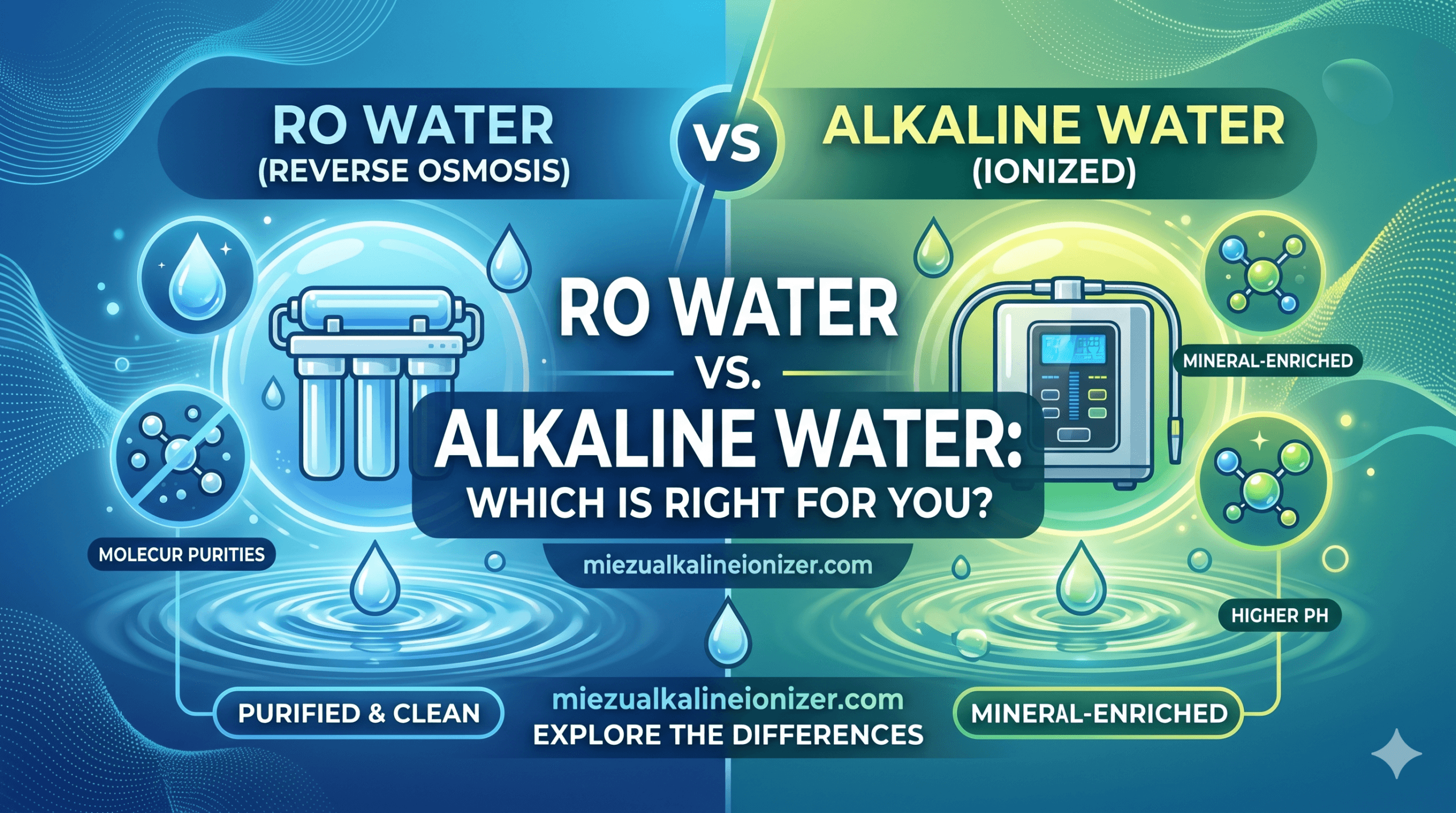

Table of Contents
Introduction to RO Water vs Alkaline Water
For years, RO water purifiers have been considered the gold standard for safe drinking water in India. In cities struggling with hard water, contamination, and inconsistent municipal supply, RO systems became almost essential in urban households. Parents trusted them, apartments installed them, and purifier brands dominated the market with promises of purity and protection.
But in 2026, the conversation around drinking water in India is beginning to change.
People are no longer asking only one question:
“Is the water clean?”
They are now asking:
“Is the water actually healthy?”
This shift is important because modern Indian families are becoming increasingly aware of hydration quality, mineral balance, digestion, immunity, acidity, and long-term wellness. As health awareness grows, many consumers are discovering that while RO purification effectively removes contaminants, it may also remove something equally important essential minerals.
This has led to a new debate emerging across India:
Is RO water alone enough for healthy hydration?
The answer is more complex than most people realize.
This article explores the limitations of traditional RO systems, the growing concerns around mineral-depleted water, the rise of alkaline water ionizers, and why Indian households in 2026 are moving toward smarter hydration solutions.
Why RO Water Became Popular in India
The Rise of Water Purification in Urban India
India’s water quality challenges are unique.
Different regions face:
- Hard water
- High TDS levels
- Industrial contamination
- Chlorine treatment
- Heavy metals
- Bacterial contamination
- Inconsistent municipal infrastructure
As urbanization increased rapidly, families needed reliable purification systems at home.
RO technology became widely adopted because it effectively removes:
- Dissolved salts
- Heavy metals
- Contaminants
- Harmful impurities
For many years, this was considered enough.
And to a large extent, RO systems successfully solved major water safety problems for Indian households.
However, the problem is that purification and nutrition are not always the same thing.
What RO Water Actually Does
Understanding Reverse Osmosis Simply
RO stands for Reverse Osmosis.
This technology uses a semi-permeable membrane to remove contaminants from water under pressure.
It is highly effective at filtering:
- Lead
- Arsenic
- Fluoride
- Excess salts
- Bacteria
- Chemicals
But during this process, RO systems often remove naturally occurring minerals too.
These include:
- Calcium
- Magnesium
- Potassium
- Trace minerals
The result is highly purified water but often mineral-deficient water.
This is where the conversation around healthier hydration begins.
The Mineral Problem With RO Water
Why Minerals Matter More Than People Realize
Water is not only about hydration. Naturally occurring minerals in drinking water also contribute to daily wellness.
Minerals such as calcium and magnesium support:
- Bone health
- Muscle function
- Hydration balance
- Nervous system function
- Electrolyte balance
When water loses these minerals entirely, it can taste flat and feel less satisfying.
Many health-conscious consumers are now questioning whether long-term consumption of mineral-depleted water is ideal.
This concern has become especially relevant in India because:
- Many people already consume nutrient-poor diets
- Processed foods dominate urban lifestyles
- Hydration quality is declining
- Acidity and digestive issues are increasing
Why RO Water Often Tastes Flat
Taste Is an Important Hydration Signal
One of the most common complaints about RO water is:
“It tastes bland.”
This happens because minerals contribute significantly to water taste.
When water loses its natural mineral composition:
- Taste becomes neutral or flat
- People often drink less water
- Hydration quality may decline
This is one reason many people prefer:
- Natural spring water
- Mineral water
- Alkaline water
Better taste often leads to:
- Higher water intake
- Improved hydration habits
- Better digestive comfort
Hydration is not only about access to water it is also about how willingly people consume it throughout the day.
The Growing Acidity Problem in India
Modern Indian Lifestyles Are Increasing Internal Acidity
One of the biggest health discussions in India today is acidity.
Common triggers include:
- Fried foods
- Spicy meals
- Processed snacks
- Tea and coffee
- Late-night eating
- Stress
- Sleep deprivation
Many families now experience:
- Acid reflux
- Bloating
- Heartburn
- Gastric irritation
- Indigestion
These concerns are becoming increasingly common across urban India as modern lifestyles continue to affect digestion, hydration, and overall wellness.
According to multiple Indian healthcare surveys, digestive discomfort, acidity, and hydration-related lifestyle concerns are increasingly common in urban populations due to stress, processed diets, irregular sleep, and environmental pollution.
The problem is that some purified RO water may become slightly lower in pH after extensive mineral removal, depending on the filtration system and source water.
This has created growing interest in alkaline water systems that provide:
- Higher pH levels
- Mineral-rich hydration
- Better taste
- Antioxidant properties
[Internal Link : Alkaline Water for Acidity]
Why Hydration Quality Matters in 2026
Clean Water Is No Longer Enough
The wellness industry has evolved dramatically.
Today, people care about:
- Gut health
- Hydration efficiency
- Recovery
- Energy levels
- Preventive wellness
- Long-term health optimization
This has changed the way consumers think about water.
Modern consumers want water that:
- Is purified
- Retains minerals
- Supports hydration
- Feels refreshing
- Supports wellness goals
This is exactly where alkaline water systems have entered the conversation.
What Is Alkaline Water?
Understanding the Difference: RO Water vs Alkaline Water
Alkaline water typically has:
- A higher pH level
- Essential mineral retention
- Antioxidant properties
- Better taste profile
Modern alkaline water ionizers use electrolysis technology to:
- Separate alkaline and acidic streams
- Improve pH balance
- Retain healthy minerals
Some advanced systems also generate hydrogen-rich water with negative ORP (Oxidation Reduction Potential), which is associated with antioxidant potential.
Unlike basic RO systems, alkaline water systems focus not only on purification but also on hydration quality.
Why Many Modern Systems Combine RO + Alkaline Technology
In many Indian cities, high TDS and contamination still make RO purification necessary. However, modern hydration systems increasingly combine RO purification with mineral balancing and alkaline enhancement.
This approach aims to provide:
- Effective contaminant removal
- Better taste
- Balanced mineral content
- Improved hydration experience
As a result, many modern Indian households are shifting toward hybrid purification systems rather than relying on traditional RO alone.
Why Indian Families Are Upgrading to Alkaline: RO Water vs Alkaline Water
Wellness Expectations Have Changed
The shift toward alkaline water is not happening only because of trends.
It reflects a broader shift in consumer priorities.
Indian households today are increasingly investing in:
- Preventive wellness
- Better nutrition
- Fitness
- Air purification
- Smart kitchens
- Hydration quality
Families no longer want only “safe” water.
They want water that actively supports healthier living.
This is why alkaline water ionizers are becoming more common in:
- Urban apartments
- Fitness-oriented households
- Senior citizen homes
- Wellness-focused families
Can RO Water Cause Mineral Deficiency?
A Balanced Perspective
It is important to avoid exaggerated claims.
RO water alone does not automatically cause serious mineral deficiencies in healthy individuals with balanced diets.
However:
- Water can contribute to daily mineral intake
- Mineral-free water may feel less hydrating
- Taste and hydration habits may decline
Experts generally recommend maintaining balanced mineral intake through:
- Food
- Hydration
- Healthy lifestyle habits
This is why many modern systems now include:
- Mineral balancing
- TDS control
- Alkaline enhancement
Why Alkaline Water Feels More Hydrating to Many Users
The Hydration Experience Matters
Many users report that alkaline water:
- Feels lighter
- Tastes smoother
- Encourages higher water intake
- Reduces dry mouth
- Supports digestion
Some research discussions suggest alkaline ionized water may have smaller molecular clusters that improve hydration absorption efficiency.
This remains an evolving area of research, but user experience continues to drive strong demand.
Pollution and Stress Are Changing Hydration Needs
Urban India Is Under Constant Oxidative Stress
People living in metro cities are constantly exposed to:
- Air pollution
- Stress
- Heat
- Processed food
- Sedentary lifestyles
This increases oxidative stress in the body.
Modern alkaline ionizers increasingly focus on hydrogen-rich water because molecular hydrogen is being researched for its antioxidant potential.
This is one reason alkaline water has gained popularity among:
- Fitness enthusiasts
- Working professionals
- Health-conscious families
[External Link : Research on hydrogen-rich water and oxidative stress]
The Environmental Problem With RO Systems
Water Wastage Is Becoming a Serious Concern
One of the biggest criticisms of traditional RO systems is water wastage.
Many RO purifiers reject:
- 2–3 liters of water for every liter purified
In a country already facing water scarcity challenges, this has become a growing concern.
Modern alkaline systems are increasingly focusing on:
- Lower rejection rates
- Water efficiency
- Smarter purification
Consumers in 2026 are becoming more environmentally conscious than ever before.
What Modern Indian Families Actually Need: RO Water vs Alkaline Water
The Ideal Water Solution in 2026
Modern families are no longer looking for only purification.
They want:
- Safe water
- Mineral-rich water
- Better taste
- Better hydration
- Smarter technology
- Long-term wellness support
This is why advanced alkaline ionizers now include:
- RO compatibility
- AI technology
- Smart filtration
- Multiple pH levels
- Hydrogen-rich water
- Mineral balancing
The industry itself is evolving beyond traditional purification models.
Choosing the Right Water System for Indian Homes: RO Water vs Alkaline Water
What Consumers Should Consider
Before buying any system, families should evaluate:
Local Water Quality
High-TDS areas may still require RO-based purification.
Mineral Retention
The system should avoid over-stripping healthy minerals.
Hydration Quality
Taste and usability matter significantly.
Long-Term Wellness Goals
Modern consumers increasingly prefer preventive wellness solutions.
Service Support
Reliable after-sales support is essential in India.
Best Water Purifier for Indian Families
Common Signs Your Water May Not Be Supporting Healthy Hydration
Symptoms Many Families Ignore
Some common issues linked to poor hydration quality include:
- Constant acidity
- Dry mouth
- Low water intake
- Bloating
- Fatigue
- Flat-tasting water
- Digestive discomfort
Improving hydration quality often improves daily wellness habits significantly.
FAQs About RO Water vs Alkaline Water
Is RO water unhealthy?
RO water is effective for purification, but it may remove essential minerals during the filtration process.
Why does RO water taste flat?
Minerals contribute to water taste. Since RO removes many minerals, the water often tastes bland.
RO Water vs Alkaline Water which is better?
Alkaline water systems focus on both purification and hydration quality by retaining minerals and improving pH balance.
RO Water vs Alkaline Water for Acidity?
Many users report improved digestive comfort and reduced acidity symptoms after consuming alkaline water regularly.
Should Indian homes stop using RO purifiers?
Not necessarily. In high-TDS areas, RO purification may still be essential. However, many families now prefer systems that combine purification with mineral balancing and alkaline enhancement.
Conclusion to RO Water vs Alkaline Water
The future of drinking water in India is no longer only about purification. It is increasingly about creating a balance between safety, hydration quality, mineral support, and long-term wellness.
RO technology remains important, especially in regions with high contamination and TDS levels. But modern consumers are now exploring smarter hydration systems that combine purification with mineral balancing, alkaline enhancement, and better overall hydration experience.
As wellness awareness continues to grow across India, the focus is gradually shifting from simply “safe water” to water designed for healthier everyday living.For many modern Indian families, healthy hydration is becoming an important part of preventive wellness and everyday lifestyle choices.
Check out Alkaline Water Ionizer Products by Miezu